Loading...
Serving Rancho Palos Verdes, CA and surrounding areas. (424) 447-1592
Tired of a cracked or unpaved parking area? We build concrete lots designed for RPV hillside lots, drainage requirements, and coastal soil conditions.
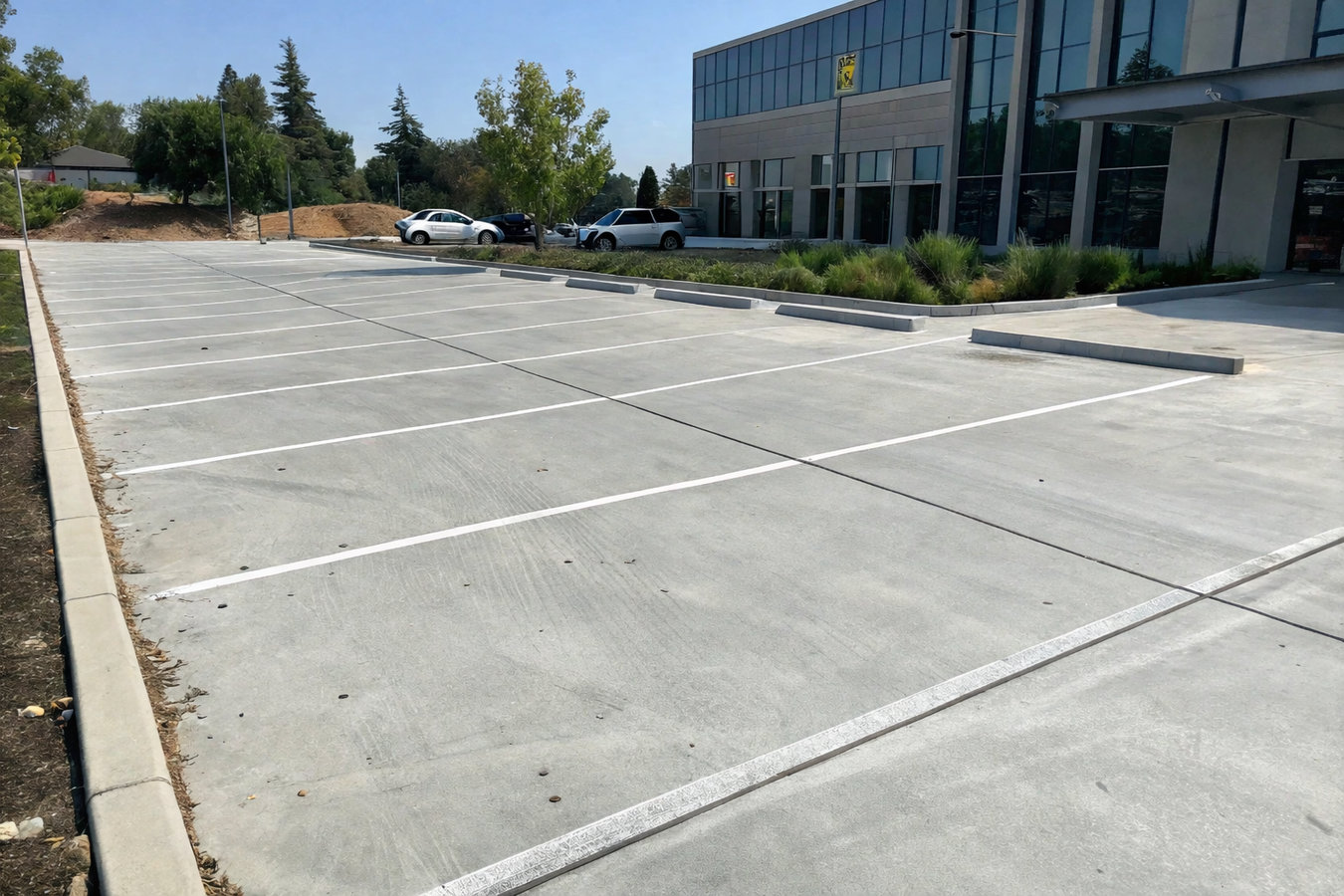
Concrete parking lot building in Rancho Palos Verdes means removing the existing surface, preparing a stable compacted base, and pouring a reinforced slab designed to hold vehicle weight for decades - most residential and small commercial lots take two to five days of active work, followed by a seven-day curing period before light vehicle use.
If you have a cracked asphalt surface, a muddy gravel area, or a bare dirt parking zone that turns to ruts every winter, a concrete lot ends that cycle permanently. RPV homeowners often combine this work with a new concrete driveway to get a consistent, finished look from the street to the parking area.
The key differences between a lot that lasts 30 years and one that cracks within five come down to three things: proper base preparation, correct joint placement, and a drainage slope built into the design from the start. We address all three on every job in RPV.
Visible cracks running across your parking area, or sections that have risen or dropped relative to each other, signal a compromised base or ground movement. In Rancho Palos Verdes, where the peninsula's geology causes slow soil movement in many neighborhoods, this kind of damage is more common than in flat inland cities. A cracked or uneven surface becomes a trip hazard and worsens every rainy season.
Standing water that does not drain within an hour or two means the surface lacks proper slope. This is a particular concern in RPV, where winter rain events can be heavy and the hillside terrain means water needs a clear path to move. Pooling water weakens the surface, pushes water toward your foundation, and creates a slipping hazard. A properly designed concrete lot solves this by building drainage in from the start.
An unpaved parking area that produces dust in summer and mud in winter, shifting and rutting under vehicle weight, is ready to be replaced with a permanent surface. Converting to concrete gives you a year-round surface that holds up to daily use and stays clean. This is a common upgrade for RPV homeowners who have added a second vehicle or want to improve curb appeal.
Asphalt surfaces typically need resurfacing every 10 to 20 years, and eventually reach a point where patching is no longer cost-effective. If your asphalt is heavily cracked, has large potholes, or is crumbling at the edges, replacing it with concrete is often the smarter long-term investment. Concrete lasts two to three times as long and requires far less ongoing maintenance.
Our concrete parking lot work covers the full scope from demolition and site prep through pouring, finishing, joint cutting, and final inspection. We handle permit applications with the RPV Building and Safety Division, manage hillside access logistics including pump trucks when needed, and design the drainage slope into every lot so water moves away from your home. If your project also needs new concrete footings for a carport, shade structure, or retaining wall at the lot edge, we can coordinate that work in the same project window.
Finish options include a standard broom finish for grip and practicality, an exposed aggregate surface for visual texture, or a smooth trowel finish for a cleaner look. We also offer sealing on completion to protect against oil stains and moisture penetration, which extends the life of the surface and reduces long-term maintenance. Every lot we pour includes properly spaced control joints to prevent random cracking as the slab expands and contracts with seasonal temperature changes.
Ideal for homeowners replacing gravel, dirt, or decomposed granite with a permanent, maintenance-free surface.
Suited for lots where asphalt has reached the end of its lifespan and concrete offers a better long-term return.
For homeowners adding an accessory dwelling unit and needing code-compliant, dedicated parking on the property.
Designed for RPV properties with steep grades, narrow access, and complex drainage requirements.
For small business owners or HOA-managed properties needing a durable surface with clear drainage and joint planning.
Building a concrete parking lot in Rancho Palos Verdes is not the same as building one in Torrance or Gardena. RPV sits on one of the most geologically complex landslide zones in the United States, and large portions of the city, particularly near Portuguese Bend and the Abalone Cove area, experience slow ground movement. Any concrete lot built on or near unstable soil without a proper site assessment will crack and shift regardless of how well the concrete itself is mixed. We assess every site before we commit to a design, because the ground under your lot matters as much as the concrete on top of it. Homeowners in Rolling Hills Estates and Palos Verdes Estates face similar hillside and soil considerations and we serve both communities.
RPV also has strict permitting requirements for any work that creates new impervious surface. A new concrete lot changes how rainwater flows across your property, which triggers a permit review and in some cases a grading permit as well. Many neighborhoods are also governed by HOAs with architectural review processes that run separately from the city permit. We know both layers of the approval process and handle them in the correct order so your project does not stall once it starts. Getting permits right from the beginning also means your lot is legally documented when you eventually sell the property.
We schedule a visit to your property before giving you a price. A contractor who quotes over the phone without seeing your site is guessing, and that guess often leads to surprises later. We look at slope, access, drainage, and any site-specific challenges before we commit to a number. You will hear back within one business day of your inquiry.
In Rancho Palos Verdes, a new concrete parking surface almost always requires a building permit and sometimes a grading permit. We submit the application and factor the review period into your timeline so work begins on schedule. We will also flag any HOA approvals you need before we apply for the city permit.
Once permits are approved, we remove the existing surface, excavate to the correct depth, and compact the soil. We then bring in and compact a crushed gravel base layer. This phase is what determines whether your finished lot holds up for decades or starts cracking in a few years.
We set forms, pour and finish the concrete, and cut control joints before the slab hardens. If your site requires a pump truck due to limited access, we handle that logistics. After the pour, we give you a clear curing timeline - typically five to seven days before light vehicle use - and confirm the final city inspection.
We visit your site in person before quoting, pull every required permit, and build drainage into every lot we pour. Call or submit the form - we respond within one business day.
(424) 447-1592We evaluate ground conditions at your specific site before designing your lot. In a city where the geology varies block by block, a contractor who skips this step is setting you up for cracks within a few years. Our assessment catches access challenges, drainage issues, and soil concerns before they become cost overruns.
We handle the building permit application, any required grading permit, and flag HOA approval requirements before we apply for the city permit. This sequencing matters - RPV's Building and Safety Division reviews are thorough, and a disorganized submittal adds weeks. We have been through this process and know how to move it forward efficiently.
Many RPV properties cannot be reached by a standard concrete truck. We plan for pump truck access on any job where direct truck delivery is not feasible, and we include that cost in the written estimate rather than surprising you with an add-on once work begins. You know the full price before we start.
Every lot we pour has a drainage slope built into the design so water moves away from your home. This is especially important in RPV, where heavy winter rain events and hillside terrain mean water needs a clear, planned path to move. Poor drainage is the leading cause of concrete lot failure in coastal hillside communities, and we address it at the design stage.
Every parking lot we build is permitted, inspected, and documented so you have a clean record if you ever sell. For additional guidance on contractor licensing, verify any contractor at the California Contractors State License Board before signing anything.
Structural footings that anchor decks, walls, and additions to solid ground on hillside lots.
Learn MoreNew driveways designed for RPV's steep grades, coastal soils, and HOA aesthetic standards.
Learn MorePermit season fills fast and the dry-weather pour window is limited. Contact us now to lock in your project before the next rainy season.