
Loading...
Serving Rancho Palos Verdes, CA and surrounding areas. (424) 447-1592
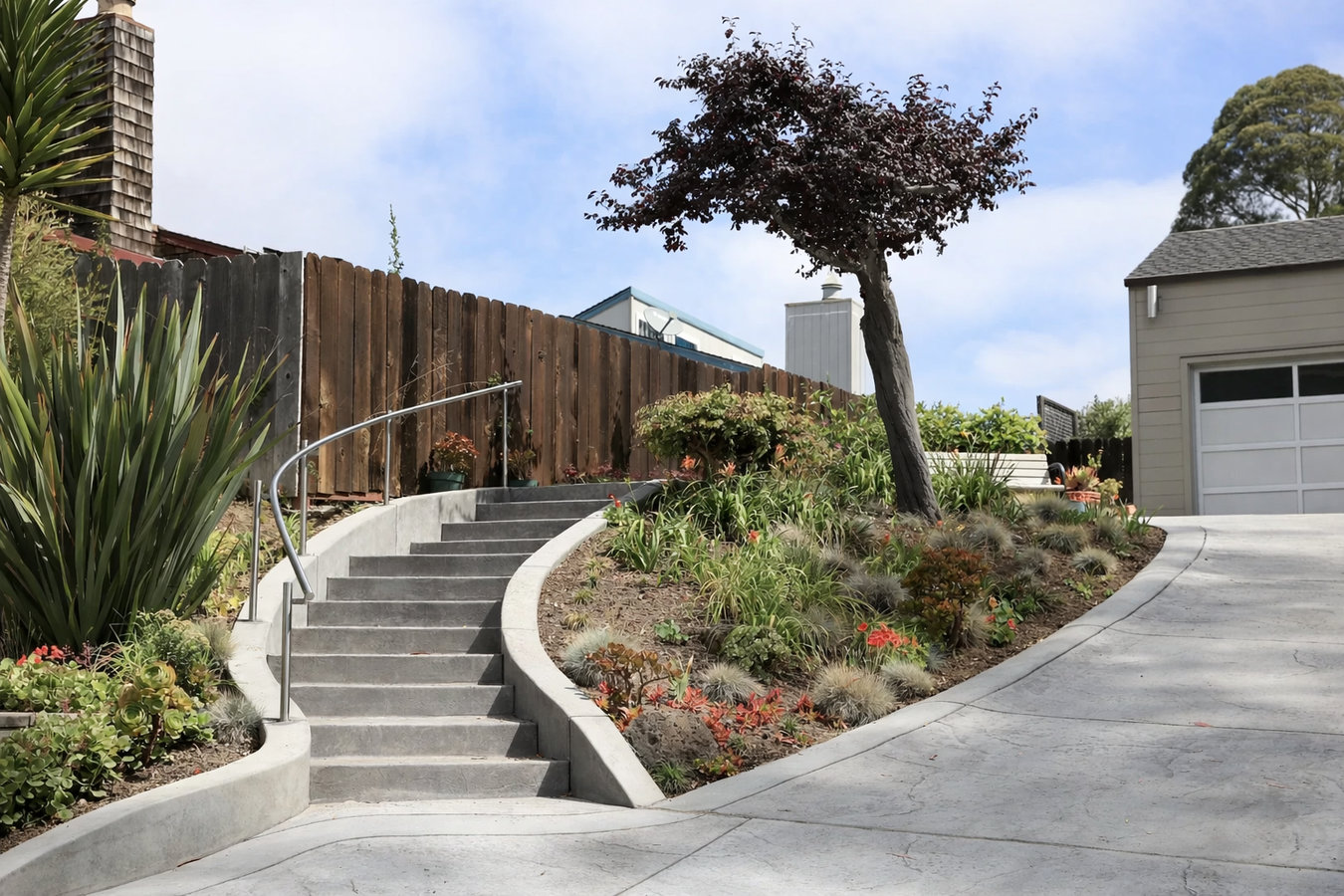
Hillside lots need steps that stay put. We pour reinforced concrete steps built for RPV's steep grades and active soil - with finishes that stay safe on foggy coastal mornings.
Concrete steps construction in Rancho Palos Verdes means excavating for footings, building wood forms sized to your exact grade change, placing steel reinforcement, and pouring - most front entry projects take one to two days of active work. The peninsula's steep lots and clay-heavy soil mean footing depth and rebar placement matter as much as the pour itself, because steps on a shifting slope without proper anchoring will tilt or crack regardless of concrete quality.
Most homeowners in RPV contact us because their current steps have cracked, tilted, or separated from the landing - all signs that the original design did not account for the grade or soil. If your entry also needs a level landing area at the top or bottom, our slab foundation building service can be paired with steps to create a complete, level entry.
Small surface cracks can be cosmetic, but cracks that go all the way through - or that are getting wider over time - mean the structural integrity is gone. In Rancho Palos Verdes, where ground movement is common, cracks that appear suddenly or grow quickly often signal that the soil beneath has shifted. Once a step cracks through, it will not heal on its own.
If a step rocks when you stand on it, or the surface now slopes sideways instead of forward, the footing beneath has likely moved. This is especially common in RPV neighborhoods near the city's mapped landslide areas. A tilted step is a tripping hazard, and in active soil zones it is also a sign that the movement may continue.
Concrete steps that have worn smooth lose their grip, and in a coastal community where morning marine layer leaves surfaces damp, smooth steps become genuinely dangerous. If you find yourself holding the railing more carefully on foggy mornings, the surface texture has worn past the point where it is doing its job.
A gap between your steps and your front door threshold - or between the bottom step and the walkway - means the steps have moved independently of the structure they connect. This lets water in, accelerates deterioration, and creates a trip hazard. It also signals that the steps were not properly anchored or that ground movement has pulled them away.
We build poured-in-place concrete steps for front entries, side yard access, and terraced hillside lots throughout the South Bay. Every project starts with a site visit to measure the grade change and assess soil conditions - because the footing depth and rebar layout for a three-step entry on flat ground are completely different from what a six-step staircase on a sloping RPV lot requires. If your steps connect to a retaining wall or terraced yard, we also handle concrete retaining walls so the whole system is designed and built together.
Finish options range from a practical broom texture to stamped patterns and exposed-aggregate surfaces. We discuss the options with you before anything is poured, including which finishes hold up best in RPV's coastal moisture conditions and which give the best grip underfoot. If your steps need to meet HOA design guidelines, we know what most review boards in this area are looking for and can guide you through the submission.
Suits homeowners building steps for the first time to connect a new grade change or entry modification.
Suits homeowners whose existing steps have cracked through, tilted, or separated from the foundation.
Suits sloped RPV lots with significant elevation changes between street level and the front door or backyard.
Suits homeowners prioritizing safe footing on damp morning surfaces at the most practical price point.
Suits homeowners who want curb appeal that matches a higher-end entry or recently updated home exterior.
Suits sloped lots where the stairway needs to be anchored against lateral soil pressure on one or both sides.
Rancho Palos Verdes is one of the most geologically active communities in the United States - portions of the city sit on land that moves slowly and continuously. This is not an exaggeration for dramatic effect; the city maintains an active program to monitor the landslide complex that underlies much of the peninsula. For concrete steps, this means footing depth and rebar placement are not standard callouts from a spec sheet - they are specific decisions based on your lot's location, slope, and soil. Homeowners in Palos Verdes Estates and Rolling Hills Estates face the same hillside conditions and benefit from the same ground-up approach.
The coastal marine layer also plays a real role here. Morning fog leaves exterior surfaces damp most days from late spring through summer, and steps that do not have a textured finish become genuinely slippery during those hours. A finish that looks sharp in a photo but has no grip underfoot is a liability in this microclimate. The City of RPV Geology and Soils resources document the conditions that affect projects throughout the peninsula - a contractor who has read and understood these resources will approach your project differently from one who has not.
We ask a few questions - how many steps, replacing existing or building new, and where on your property. Most homeowners hear back within one business day to schedule a free on-site visit. We do not quote steps over the phone because the slope, soil access, and existing conditions all affect the price in ways a photo cannot show.
For most new concrete steps in RPV, we apply for a building permit on your behalf. If your neighborhood has an HOA, design review may run concurrently or need to happen first - plan for one to three weeks for the permit, and two to six weeks if HOA review is involved. We manage the paperwork and keep you updated on timing.
The crew excavates to the footing depth needed for your specific lot, removes any old steps, and builds wood forms in the exact shape of your finished steps. Steel reinforcing rods are placed inside the forms before any concrete is poured. This prep work typically takes a few hours to a full day depending on complexity.
Concrete is poured, textured, and covered to cure. You can walk on the steps lightly within 24 to 48 hours - the concrete gains full strength over about 28 days. The city inspector visits before the project is officially closed. We do a final walkthrough with you to confirm the steps are level, the finish looks right, and any questions are answered before we leave.
We handle permits, HOA submissions, and hillside site prep - no paperwork for you to chase.
(424) 447-1592We hold a current C-8 Concrete Contractor license from the California Contractors State License Board, verifiable in seconds at cslb.ca.gov. This means we carry the required bond and insurance, and we are accountable to a state regulatory body - not just a handshake.
Every set of steps we build includes steel reinforcing rods embedded in the concrete and footings sized for your specific slope and soil. On a hillside lot in RPV, skipping these elements is how steps crack and tilt within a few years. This reinforcement is standard on every project we take on, not an optional upgrade.
We have navigated the city building permit process and understand the geological hazard zone review requirements that can affect projects on the peninsula. Knowing how to submit correctly the first time - and how to answer the questions that come up in that process - keeps your project on schedule.
RPV Building and Safety DivisionWe choose and apply finishes that provide real grip when wet - which in RPV means most mornings from late spring through summer. A smooth-looking step that gets slippery in the marine layer is not a finish we recommend. We show you examples of every option before the pour and explain the grip performance of each.
In a community with active geology, HOA design review, and a coastal microclimate, the difference between a contractor who works here regularly and one who does not shows up in how the project is designed before anything is poured. We bring all of that local knowledge to every set of steps we build.
Create a level base for a new entry landing, ADU, or addition on your sloped RPV property.
Learn MoreAnchor terraced yard levels and prevent soil movement with reinforced concrete retaining walls built for hillside lots.
Learn MoreCall today or submit an estimate request - our schedule fills quickly and we would rather plan your project now than have you waiting through a backlog.