Loading...
Serving Rancho Palos Verdes, CA and surrounding areas. (424) 447-1592
RPV's clay soils and hillside lots demand more than a standard pour. We handle soils coordination, permits, and reinforcement so your slab starts right.
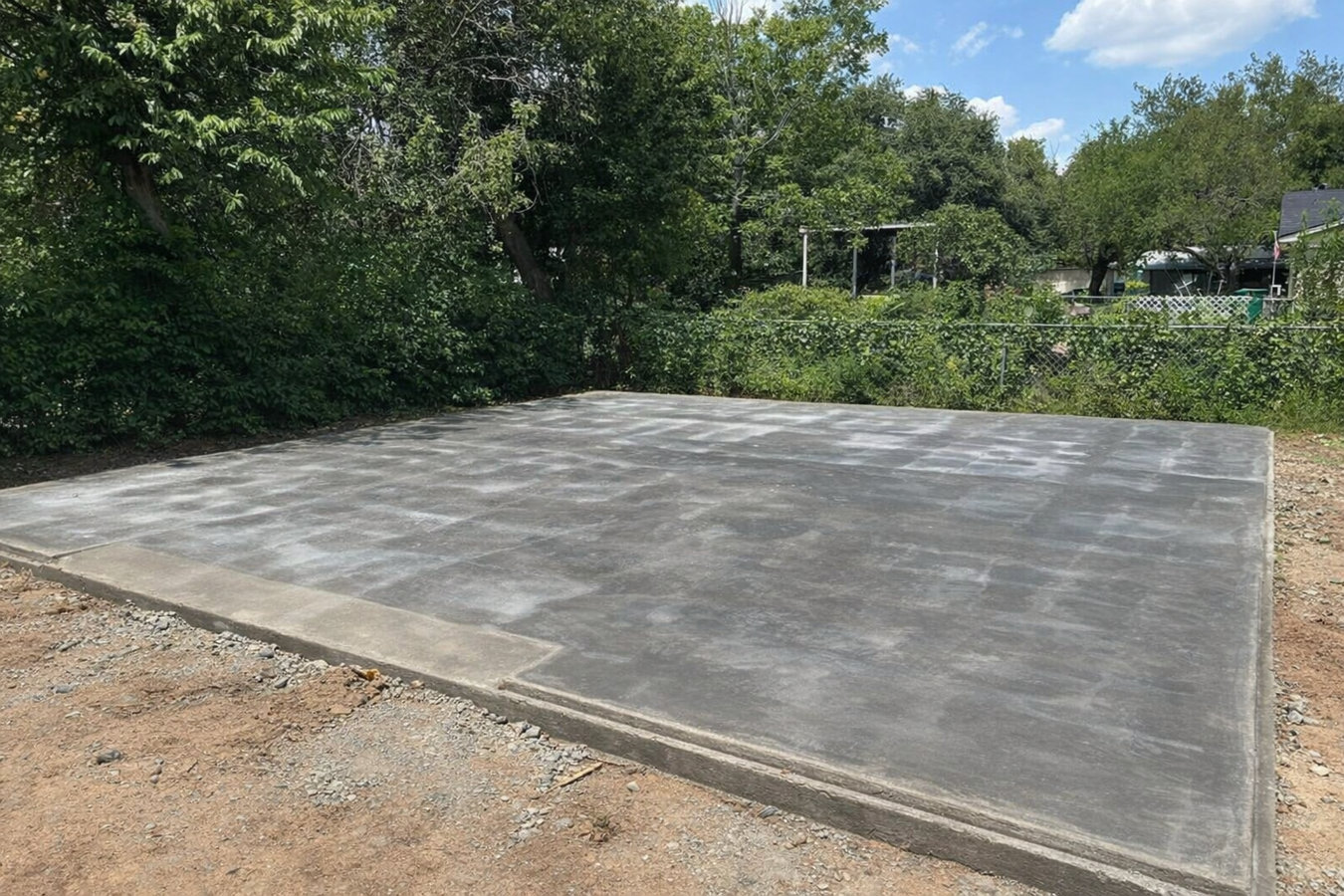
Slab foundation building in Rancho Palos Verdes involves excavating and grading a level pad, placing a moisture barrier and steel reinforcement grid, then pouring a single thick concrete layer that becomes both the floor and the base the structure sits on. Most residential projects - from additions to ADU pads - take one to two weeks from site prep to the first city inspection.
The challenge in Rancho Palos Verdes is what is underneath. The clay-rich soils on the Palos Verdes Peninsula expand when wet and shrink when dry, putting stress on concrete from below every rainy season. A slab poured without accounting for that movement can crack and settle within just a few years. If you are also planning a full foundation installation for a larger structure, the same site-specific design principles apply.
Many homeowners in RPV are also navigating the city's permit process for the first time. We coordinate the soils report, permit application, and city inspections as part of the job - so you do not have to manage that process while also managing a construction project.
If a ball rolls on its own across a room, or doors that once closed easily now swing open by themselves, the slab beneath may have shifted. In Rancho Palos Verdes, this kind of movement is often tied to clay soils expanding and contracting with seasonal rain. It does not always mean disaster, but a professional should take a look before the movement gets worse.
Diagonal cracks that start at the corners of door frames or windows - especially if they are wider than a pencil line or have grown since you first noticed them - can signal that the foundation is moving unevenly. This pattern is worth taking seriously on the hillside lots common in Rancho Palos Verdes where soil movement is an ongoing reality.
If you are adding a room, garage, or accessory dwelling unit, you will need a new slab poured for that structure. The City of Rancho Palos Verdes requires a permit and inspections for this work, and the design must account for local soil conditions. Starting early - before finalizing your addition plans - gives you time to get the soils report and permit review done without delaying your project.
If the concrete at the edge of your slab is chipping or showing rough, porous patches, it may have been poured improperly or damaged by water intrusion over time. The coastal moisture in Rancho Palos Verdes accelerates this kind of surface deterioration, especially on older slabs that predate modern moisture barrier standards. Surface damage does not always mean the whole slab needs replacing, but it does warrant a professional assessment.
Every slab foundation project we take on starts with a site visit, not a phone quote. Rancho Palos Verdes has too much terrain and soil variation for a flat-rate estimate to mean anything. We build new residential slabs for additions, ADUs, and detached structures - and we design each one for the specific soil conditions and drainage needs of that lot. If your project also calls for concrete footings for load-bearing walls or outbuildings, we can scope that work together so everything is permitted and inspected as one coordinated project.
For hillside lots - which describes a large portion of RPV - we handle the excavation and grading work needed to create a level pad before any concrete is placed. That includes compacted fill, drainage routing, and coordination with the city's grading review if required. Every slab we pour includes a continuous moisture barrier sealed at the edges, a reinforcing steel grid sized for the site's soil report recommendations, and control joints placed to manage future curing movement.
Suits homeowners building an addition, ADU, or accessory structure on a flat or terraced lot.
Suited to sloped RPV lots that require excavation, grading, and compacted fill before concrete work begins.
The right choice for coastal and low-lying properties where ground moisture migration is a concern.
Designed for garage slabs or structures that will support vehicles, equipment, or significant point loads.
Rancho Palos Verdes sits on one of the most geologically active landslide zones in California. Large portions of the city - particularly along Palos Verdes Drive South - have been designated as active or potential landslide areas. Before any foundation work begins, the city typically requires a licensed geotechnical engineer's soils report, and in designated zones, plan review is more involved than in neighboring cities. This is not bureaucracy for its own sake - it is what ensures the slab is designed for the ground it will actually sit on. Homeowners in Rolling Hills Estates, CA face similar hillside conditions, and the same careful site-specific approach applies there.
The Palos Verdes Peninsula is also underlain by clay-rich soils that swell in winter and shrink in dry months. That seasonal movement is one of the main reasons older slabs in the area crack and settle - they were not designed with enough reinforcement or a thick enough gravel base to buffer that cycle. The coastal marine layer adds persistent humidity that can affect how concrete cures and how long it lasts without a proper moisture barrier. Homeowners in Palos Verdes Estates, CA deal with the same combination of clay soils and ocean air, and the same design decisions that protect a slab in RPV apply throughout the peninsula.
For authoritative guidance on soil conditions and landslide zones in the area, the California Geological Survey publishes detailed landslide hazard mapping for the Palos Verdes Peninsula. The Portland Cement Association also provides technical standards for slab-on-grade construction and concrete curing practices.
When you reach out, we ask a few questions - the size of the slab, what it is for, and whether a soils report has been done. We visit the site before giving a firm number, because terrain and soil conditions vary across RPV. Expect a written estimate within a few days of the visit.
Most foundation projects in Rancho Palos Verdes require a geotechnical soils report and a city building permit before work begins. Plan review at the Building and Safety Division can take two to four weeks. We coordinate this process so you are not left managing city paperwork on your own.
Once permits are in hand, we clear vegetation, excavate to the right depth, grade for drainage, and compact a gravel base layer. On hillside lots - common in RPV - this step may take an extra day or two compared to a flat site. A city inspector visits to check the prepared ground before the pour.
We set up forms, lay the steel reinforcement grid and moisture barrier, then pour the concrete - typically in a single day. The slab then cures for at least seven days before any significant load, and closer to 28 days before framing begins. We cover it to help it cure evenly in the coastal air.
No pressure estimate. We visit the site, review your soil conditions, and give you a written quote that reflects what the project actually involves.
(424) 447-1592Our California C-8 Concrete Contractor license is current and verifiable on the CSLB website. That license is what lets us pull permits legally, which means the work gets inspected - giving you an independent check on the quality, not just our word for it.
We have worked on terraced and sloped lots throughout Rancho Palos Verdes and know the city's plan review process firsthand. Contractors without local experience often underestimate grading scope and permit timelines - we build both into every bid so there are no surprises.
Every slab we pour includes a continuous moisture barrier sealed at the edges. Living this close to the ocean means ground moisture is a real and ongoing concern - a slab without a proper barrier can allow dampness to migrate up through the concrete and cause flooring and mold problems over time.
When the job is done, you receive a copy of the signed permit and inspection records. Buyers and their inspectors look hard at foundations in RPV because of the area's landslide history. A properly permitted and inspected slab is a genuine selling point - backed by documentation, not just the contractor's assurance.
Every credential and process detail above exists because slab foundation work in Rancho Palos Verdes is not a commodity job - the geology, the permitting, and the coastal conditions all demand a contractor who has actually worked here. We have, and we back that with documentation you can keep.
Full foundation installation for new builds and whole-home replacement projects on RPV lots.
Learn MoreIsolated and continuous footings for additions, outbuildings, and load-bearing walls.
Learn MorePermit timelines in RPV can run several weeks - the sooner you reach out, the sooner your project gets moving.